Researchers in the United States have made liquid gears that can move things without ever touching them or using traditional teeth. This sounds like something out of science fiction. These systems use carefully controlled fluid dynamics to move energy smoothly and exactly, instead of having rigid metal parts grind against each other. The idea goes against hundreds of years of mechanical design and could lead to machines that are quieter, last longer, and have completely new uses. This new technology shows how using modern science to look at old problems in new ways can change the future of motion control, from advanced robotics to medical devices.
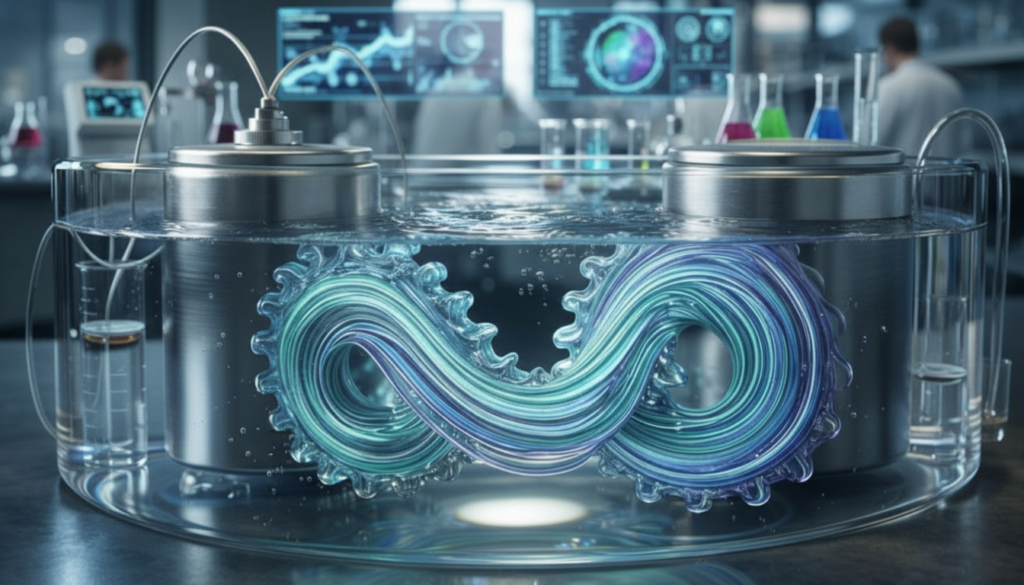
Liquid gears technology is changing how motion is transferred.
Liquid gears shape and direct fluids so that they act like solid parts. This lets motion move from one part to another without touching them. This method gets rid of friction points that usually cause noise and wear. Engineers say that it is motion without contact that is controlled by fluids instead of metal teeth. Systems can last longer and need less maintenance because there is no physical grinding. Another benefit is that it can adapt to changes in load right away because the medium can change shape. For businesses that need accuracy, the promise of smooth energy transfer and less mechanical stress is very appealing.
How touchless liquid gear systems work
The careful control of pressure viscosity and flow patterns is what makes these systems work. Researchers create pressure-driven rotation that works like traditional gears by changing these variables. Sensors and algorithms make sure that the liquid can change right away when conditions change. This makes it work quietly, which is great for places where noise is a problem. Because there is no rigid contact, there are also fewer failures, which helps the system last longer. What makes this so exciting is that it could lead to design ideas that can be used in a wide range of settings, from small lab tools to big industrial machines.

What liquid-based gear mechanisms might be used for in the future
Liquid gears could be useful in a lot of places, not just factories. In medicine, they could make surgical tools move with very high accuracy, which would lower the risk to patients. Robotics could benefit from adaptive motion control that responds smoothly to how people interact with it. Renewable energy systems could use them to move power in harsh environments without needing a lot of maintenance. These gears can be sealed, which means they can work without getting dirty. As research continues, experts think this technology could help make machines that are quieter safer and more efficient than any that have come before.
How liquid gears could change the field of engineering
For hundreds of years, mechanical engineering has relied on solid parts touching each other. Liquid gears challenge that assumption by proving motion does not require teeth or touch. This change makes designers think differently by putting more emphasis on behaviour than on form. The idea could change how future engineers are trained because it has benefits like less friction loss, fewer wear problems, and more design freedom. Early tests show that it is very reliable and efficient, even though it is still new. If they are made to work well, liquid gears could become a key part of modern mechanical innovation, changing how machines are made and kept up.

Feature: Regular Gears vs. Liquid Gears
| Physical Contact Required | Not Needed |
|---|---|
| Moderate to high noise level | Very low |
| Maintenance Needs | Regular oilingLittle maintenance |
| Wear Over TimeCommon | Significantly reduced |
| Design Flexibility | Limited shapesHighly adaptable |
Frequently Asked Questions (FAQs)
1. What are liquid gears?
They are motion transmission systems that use controlled fluids instead of solid gear teeth.
2. Do liquid gears replace traditional gears completely?
No, they complement existing designs and suit specific applications requiring low friction and noise.
3. Where are liquid gears most useful?
They are ideal for robotics, medical devices, and precision machinery applications.
4. Are liquid gears commercially available?
Most designs are still in research and testing, with commercial use expected in the future.