Cats are known for being independent, but they are very sensitive to routine, attention, and social cues. After the pandemic, many UK cat owners went back to their busy commutes, only to find that their cats were acting clingy, vocal, or withdrawn. The problem is that signs of a cat being lonely can look like “quirks” or just plain trouble. Cats can feel lonely, but it’s not always obvious, and if they don’t get help, their loneliness can lead to health problems that are linked to stress. Using advice from behaviourists and experience in shelters, this article tells you how to tell if your cat is lonely, what else might be going on, and the expert-approved steps that really work. There are easy-to-follow checklists, a table for quick reference, and useful routines that any home can use.
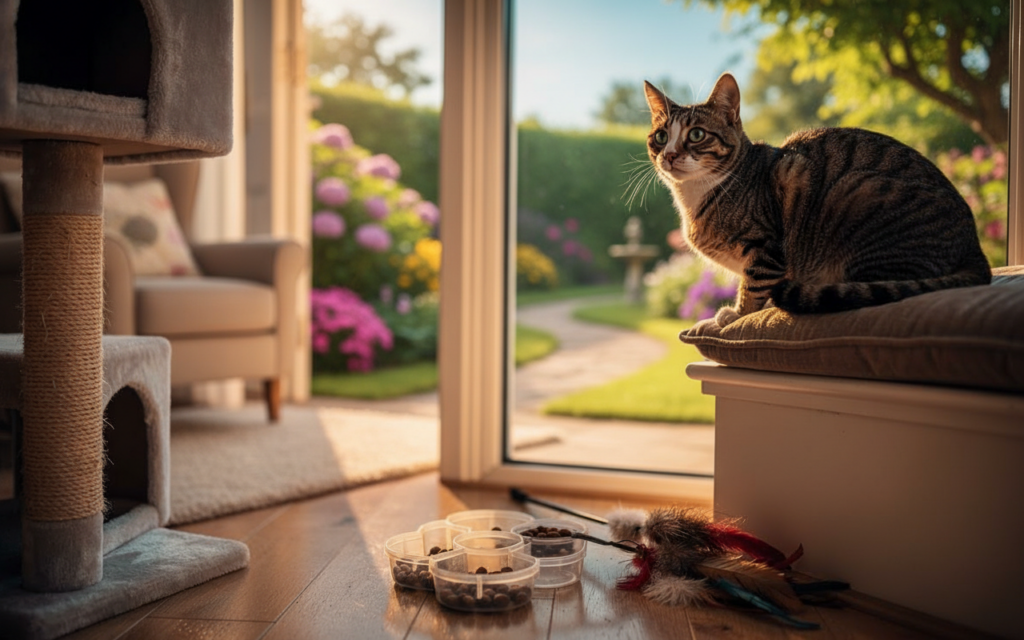
How to Tell if Your Cat is Lonely by Their Behaviour
Cats don’t usually make a big deal out of being lonely. Instead, it shows up in everyday life: a once-independent cat turns into a shadow, meowing at doors and following you from room to room; a confident cat suddenly hides when you leave; or sleep stretches out to 18–20 hours with little play. Instead of looking for one strange thing, look for groups of changes. Excessive vocalisation, attention-seeking at strange hours, over-grooming (especially bald patches on the tummy or legs), and changes in the litter tray can all be signs that social or environmental needs are not being met. If your pet’s behaviour changes for two weeks or gets worse, write them down and talk to your vet first.
Take a look at “Mabel,” a three-year-old rescue dog I wrote about in Manchester. She wasn’t destructive until her owner’s hours got longer. Out of nowhere, the post was ripped up, the blinds were clawed, and the usual greeting rituals turned into frantic clinging. A behaviourist noted that frustration related to separation was not panic, but boredom and a lack of social stimulation. The shredding stopped within two weeks after structured play, puzzle feeders, and predictable departures. What did you learn? A cat’s only way to say, “I need more from this environment,” may be to act “naughty.”

Health and Environmental Triggers that Make Solitude Hurt
Before calling a cat “lonely,” make sure there are no medical reasons for its behaviour, since pain can often hide behind behaviour. Arthritis, urinary tract disease, hyperthyroidism, or dental pain can cause sudden clinginess, irritability, or avoiding the tray. Veterinarians in the UK often see that cats who are stressed may drink less, miss meals or go to the toilet outside of the box, which can make their health and mood worse. Make an appointment for a check-up if your cat’s grooming routine, weight, or appetite changes. Ask your vet about signs of silent pain, like being stiff when you jump or not wanting to use high perches. If necessary, think about a pain trial.
Not every sign means you’re alone. A sparse environment can have similar effects. Cats evolved to be solitary hunters who do best with short, intense bursts of activity. A cat that is normally friendly can become listless if it doesn’t have enough vertical space, scent security, and predictable interaction at home. Every day, enrichment is the answer. This could mean higher paths, window perches, foraging feeders, and playtime that lasts for a set amount of time. The PDSA’s PAW Reports say that there are about 11 million pet cats in Britain. Because of busy schedules and living in cities, many of them need smarter, not necessarily longer, engagement.
Sign Possible Cause First Step
| Sign | Possible Cause | First Step |
|---|---|---|
| Over-grooming | Stress, skin pain, parasites | Vet exam; increase predictable play and add hiding spots |
| Excess meowing | Loneliness, cognitive change, hyperthyroid | Health check; introduce puzzle feeders and calm departures |
| Litter tray misses | UTI, anxiety, tray aversion | Urinalysis; add trays, clean daily, locate in quiet zones |
| Night-time restlessness | Boredom, pain, age-related change | Early-evening hunting play; warm bed; vet if persistent |
Expert-Backed Fixes: Daily Routines That Reduce Loneliness
Behaviourists consistently prioritise structure over marathon attention. Quality, not quantity, is the rule that calms lonely cats. Aim for two to three 3–5 minute play sessions daily using fishing wands that mimic prey, finishing with a small protein treat to complete the “hunt-eat-groom-sleep” cycle. Stagger food through foraging feeders so mealtimes become mini quests rather than a single bowl event. Layer in scent security: provide multiple resting sites, swap soft blankets between rooms, and avoid sudden fragrance changes.

Next, curate the space. Offer vertical territory (cat trees, shelves), a window perch with a bird-safe viewing area, and scratching stations near doorways to let your cat “own” thresholds. Use calming pheromone diffusers during schedule changes. Practise low-key exits and arrivals—no big goodbyes, just slip out. If working from home, insert micro-interactions at predictable times instead of drip-feeding attention all day, which can create dependence. Keep a simple log of play, feeding puzzles, and mood; many owners report visible improvement within two weeks.
- Morning: 5 minutes wand play + scatter a small portion in puzzle feeders.
- Midday (if home): 2 minutes scent game (treats under cups).
- Evening: 5 minutes chase play, then a high-value chew or lick mat.
- Weekly refresh: Rotate toys; add a new cardboard box or paper tunnel.
A Second Cat: Pros vs. Cons
Companionship can help some cats, but a second cat isn’t a guaranteed cure for loneliness. Pros include mutual play for young, high-energy cats and reduced owner-guilt during long workdays. Cons? Territorial stress, resource guarding, and expensive vet bills if introductions sour. Behaviourists caution that adult cats without a history of amicable cohabitation may prefer humans and rich environments to feline housemates. The safest candidates are littermates, well-matched temperaments, and similar energy levels.
If you proceed, plan for gradual introductions: separate rooms, scent swapping via cloths, then short, calm visuals before supervised contact. Provide duplicate resources (one tray per cat plus one extra; multiple feeding and water stations; several beds and scratching posts). Expect weeks, not days. If tension rises—staring, blocking, chases—pause and roll back. Shelters across the UK report better outcomes when adopters prioritise personality matching and environment upgrades before pairing. Sometimes, the true fix is more enrichment, not more cats.
- Pros: Shared play, potential comfort, stimulation when you’re out.
- Cons: Stress, fights, resource competition, higher costs.
- Best fit: Kittens together, social adults with proven cat-friendly history.
Loneliness in cats is less about hours alone and more about what those hours contain: predictable interaction, hunting play, and a territory that feels safe and interesting. Start with a vet rule-out, then rebuild your cat’s day around short, satisfying routines and smart enrichment. Track changes for two weeks and adjust. If needed, ask your vet to refer you to a certified behaviourist. With around 11 million pet cats in the UK, small evidence-based tweaks can transform millions of living rooms—what one simple change will you make for your cat this week?