Keeping good posture is very important for your overall health and well-being. Postural imbalance is becoming more common because many people spend a lot of time at their desks and in front of screens. This can make your back hurt, your neck tense, and your energy levels drop. Yoga is a gentle but effective way to solve the problem. Yoga helps you stand up straight by building strength, flexibility, and body awareness through regular practice. Here are five simple yoga poses that can make a big difference in how you sit, stand, and move.
Yoga for Better Posture Yoga for Better Posture
1. Mountain Pose (Tadasana): Getting to know your posture
Mountain Pose is a basic yoga pose that helps you become more aware of your alignment and encourages good posture. It may seem easy, but it actively works your body by teaching you how to stand tall, activate your core, and lengthen your spine. This makes it a great place to start if you want to improve your posture and build strong alignment habits.
To do Mountain Pose:

Why do people sell their Thermomix?
- Stand up straight with your feet hip-width apart and press down evenly into the ground.
- Lift the chest and tighten the thighs, but don’t lock the knees.
- Reach through the top of your head to stretch your spine up.
- Let your shoulders drop and your arms hang by your sides, with your palms facing forward.
- Keep your steady alignment for 30 seconds to 1 minute.
2. Cat-Cow Pose (Marjaryasana-Bitilasana): Making the Spine More Flexible
The Cat-Cow movement is a flowing one that gently stretches the spine and relaxes the neck, shoulders, and back. Changing between spinal extension and flexion helps your spine become more flexible and keeps your posture healthy through controlled breathing rhythm.
You should also read
What are the health benefits of eating cucumbers?
What health benefits does cucumber have?
To do Cat-Cow Pose:
- Start on your hands and knees, with your wrists under your shoulders and your knees under your hips.
- Breathe in and let your belly drop while raising your chest and tailbone.
- As you breathe out, round your spine and bring your chin toward your chest.
- Keep going for 5 to 10 slow rounds, breathing in time with the movement.
This gentle flow makes the spine more flexible, which is important for keeping a straight and balanced posture while supporting healthy spinal alignment.
3. Cobra Pose (Bhujangasana): Supporting the Upper Spine
Cobra Pose opens up the chest and shoulders while strengthening the muscles along the spine. It is especially helpful for counteracting slouching by activating the muscles that support the upper back and promoting strong upper back engagement.
To do Cobra Pose:
- Lie face down with legs extended and the tops of the feet resting on the floor.
- Place hands under the shoulders, elbows close to the body.
- Inhale and gently lift the chest by pressing into the palms.
- Keep the elbows slightly bent and engage the back muscles.
- Hold for 15–30 seconds, then slowly release.
This pose helps strengthen the back while stretching the chest, promoting a more open and upright posture with balanced spinal support.
4. Child’s Pose (Balasana): Gentle Spine Release
Child’s Pose offers a deeply relaxing stretch that soothes the back and lengthens the spine. It is ideal for relieving accumulated tension and encouraging spinal alignment, especially after prolonged sitting and daily physical strain.
To practice Child’s Pose:
- Kneel on the floor with big toes together and knees slightly apart.
- Lower the hips toward the heels and extend the arms forward.
- Rest the forehead on the mat and relax the neck and shoulders.
- Breathe deeply and hold for 1–3 minutes.
This restorative pose helps reset the spine and provides gentle relief from postural strain while promoting deep relaxation response.
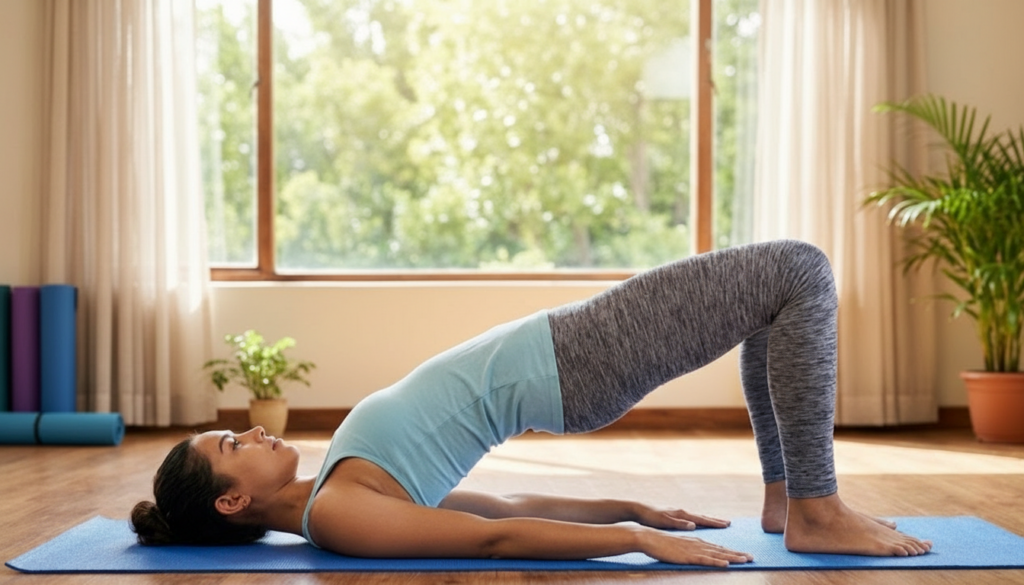
5. Bridge Pose (Setu Bandhasana): Strengthening the Lower Body
Bridge Pose targets the lower back, glutes, and core, all of which are essential for proper posture. It also opens the chest and hips, supporting better spinal alignment and encouraging strong core stability.
To practice Bridge Pose:
- Lie on your back with knees bent and feet flat, hip-width apart.
- Place arms alongside the body with palms pressing into the floor.
- Press through the feet and lift the hips upward.
- Engage the core and glutes while keeping knees aligned.
- Hold for 30 seconds to 1 minute, then lower slowly.
- Repeat 3–5 times.
This pose activates key muscles that help maintain an upright posture and reduce the tendency to slouch while enhancing lower body strength.
Conclusion: Small Daily Steps, Lasting Posture Benefits
Adding these five simple yoga poses to your daily routine can create noticeable improvements in posture over time. Regular practice helps strengthen the spine, increase flexibility, and sharpen body awareness through consistent daily effort. Starting with just a few minutes each day and staying consistent can lead to long-term benefits.
By making yoga part of your routine, you support not only better posture but also greater mindfulness and physical balance. Whether you are new to yoga or already experienced, these gentle movements can positively transform how you feel and carry yourself every day with improved body awareness.