A lot of beginners think they need to be flexible to start yoga, but you don’t need to be flexible to start. Yoga improves flexibility by first relaxing the nervous system completely. When stress levels go down, muscles stop fighting and start to naturally lengthen. Gentle, repeated movements also help circulation and keep the joints lubricated, which makes it easier to move around and feel comfortable for a long time.
Yoga Poses for Beginners to Help You Get More Flexible
Mountain Pose to Improve Your Posture Flexibility
Mountain pose helps you become more aware of your body and how it is aligned. Standing up straight with your shoulders relaxed can help your spine grow longer and lower the tension in your posture. This pose is the basis for flexibility because it helps the body support itself better during everyday activities, even though it may not seem like it.
Standing forward fold for the spine and hamstrings
This gentle forward fold stretches the back, hamstrings, and calves. Beginners can keep their knees slightly bent to stay comfortable. Letting the head hang down freely helps relieve tension in the neck and upper back, which helps with overall flexibility.
Low lunge to help hip flexors move better
Low lunge is especially good for beginners who have tight hips from sitting for a long time. It gently opens up the front of the hips and strengthens the legs at the same time. More flexible hips can often help with posture and ease pain in the lower back.
Cat-Cow Stretch to Move Your Spine
This slow, flowing sequence makes the spine more flexible from the neck to the lower back. Breathing and moving at the same time helps loosen up the shoulders and spine and safely warms up the body.
Downward Facing Dog (for beginners)
This stretch works on the back, shoulders, hips, calves, and hamstrings all at once. Beginners should keep their knees bent and work on lengthening their spine instead of straightening their legs.
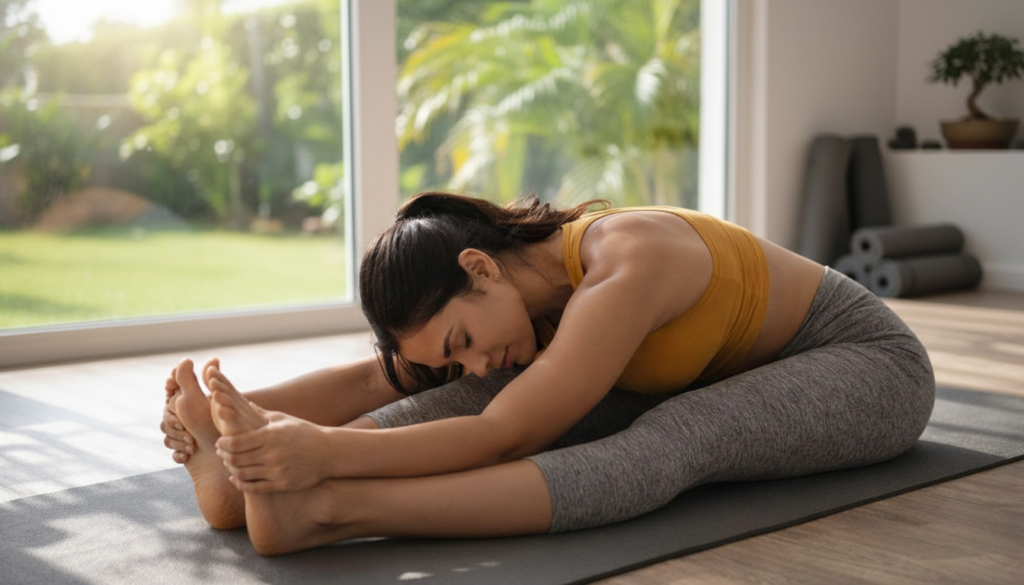
Seated Forward Fold for Gentle Lengthening
This seated pose stretches the hips, hamstrings, and lower back without putting stress on the joints. Its relaxed nature makes the muscles slowly relax and lengthen over time.
Butterfly Pose for Flexibility in the Inner Hip
The butterfly pose gently stretches the inner thighs and groin, which are often tight in beginners. Holding the pose while breathing slowly makes you more flexible without pain.
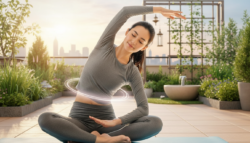
Seated Twist for Moving Your Side Body
Gentle seated twists make the spine, waist, and hips more flexible. These movements help get rid of stiffness caused by bad posture habits and bring back natural rotation.
Child’s Pose for Full-Body Release
Child’s pose lets you relax completely while stretching your hips, back, and shoulders. It is great for beginners because it combines gentle stretching with restorative rest.
The Supine Knee-to-Chest Pose can help with lower back pain.
This pose, which is done lying down, gently stretches the lower back and hips while relaxing the spine. It’s great for beginners who feel stiff after sitting for a long time.
Figure Four on Your Back for Opening Your Outer Hip
This easy hip opener lets go of tension in the glutes and outer hips without putting too much stress on the joints. When your hips move better, it can make moving around every day easier.
Reclined Bound Angle Pose for Deep Relaxation
While the body is fully supported, this restorative pose lets gravity gently open the hips and inner thighs. Longer, relaxed holds help you get more flexible without having to work for it.
How often beginners should practise
Intensity isn’t as important as consistency. If you do these poses for 10 to 20 minutes, 4 to 6 days a week, you should notice a difference in your flexibility in just a few weeks. The best results come from practicing every day in a gentle way.
Flexibility Mistakes That Newbies Should Stay Away From
Stretching too hard, holding your breath, or comparing your progress to others can all make things worse. When movements are slow, easy, and paired with steady breathing, flexibility grows the fastest.
How Natural Flexibility Helps You Live Your Life
Everyday tasks like walking, bending, reaching, and sleeping get easier as flexibility increases. Less stiffness helps you stand up straighter, feel less pain, and have more energy all day.
Final Thoughts
You don’t need to force your body to be flexible; you just need to be patient, breathe, and stick with it. These twelve yoga poses are safe and easy for beginners to do. They help you become more flexible, calm your mind, and keep your joints healthy. With regular practice, the body slowly opens up, gets longer, and moves more easily and comfortably.