Meteorologists were already keeping an eye on something even stranger high up: a change in the polar vortex that didn’t fit with the patterns they’d been studying for decades.
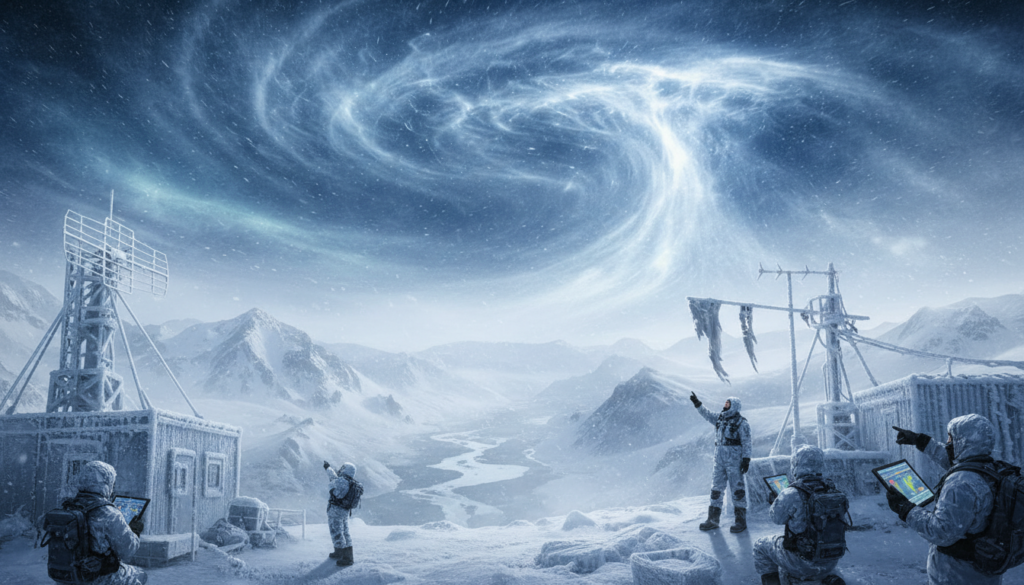
A Polar Vortex Moving and Acting Stranger Than Expected
On the ground, this looks like the usual chaos: icy winds blowing across highways, snow squalls that come out of nowhere and cut visibility, and quick freeze-thaw cycles that damage roads and nerves. But the changes higher up in the atmosphere are even more worrying, making forecasters double-check models they usually trust.
This time, the polar vortex isn’t slowly getting weaker. It is bending, sliding, and moving south in an uneven spiral, bringing Arctic air along paths that haven’t been seen in the last 40 years of records.

This isn’t just another normal cold snap. Meteorologists don’t often see this kind of setup.
Veterans who worked through the U.S. freeze of 2014 or the harsh winters in Europe from 2010 to 2012 remember those times very well. The pattern was the same back then: the vortex got weaker, the cold lobes dropped south, and the news followed. The data looks different this time.
Early measurements of the stratosphere show that wind speeds change direction in days instead of weeks, and pressure patterns change faster than some seasonal models can handle. One big European forecasting center called it a “high-confidence outlier,” which is a technical way of saying it doesn’t match what was expected.
What Makes This Event Unique
Simply put, forecasters are keeping an eye on a vortex that is not only unstable, but also speeding up and changing shape. The center of the cold air is stretching unevenly, sending narrow streams of cold air toward the mid-latitudes, where the ground is still warm from autumn.
When fast-moving Arctic air hits milder surface temperatures, it can cause sharp drops in pressure, storms to form quickly, and wind chills to change quickly.
Living in Weather That Won’t Settle Down
When models start to show warnings, don’t panic. Preparing quietly is. Start close to home: don’t just look at dramatic maps that are going around online; follow your local weather office or a trusted meteorologist. Check for updates every 6 to 12 hours during times of high instability, since things can change quickly.
Then think about what you can do. Charge the power banks. Fill a real container with water. If you need medication, move refills up instead of down.
The polar vortex is in the stratosphere, but it can affect your kitchen, car, and heating bill.
 Simple Morning Hydration Routine That Enhances Skin Glow and Sustains Energy Throughout the Day
A lot of people wait for an official emergency alert before doing anything. The problem is thinking there will be a clear countdown. In reality, cold air can come in just a few hours, making roads icy between your morning commute and your trip home.
In a normal winter, little mistakes are annoying. During a polar vortex anomaly, those same mistakes can be dangerous.
An anonymous veteran U.S. forecaster says, “From a climate point of view, this event is unusual.” “The speed of the disruption and the direction of the cold surge don’t match what we usually teach.” We’re changing the words we use right now.
Important Ways to Stay Ahead
- Track the 5–10 day window: Don’t just look at one snapshot of how forecasts change every day.
- Dress in layers. Instead of relying on a heavy coat you don’t wear very often, use lighter layers that you already have.
- Get ready for short power outages: Even short power outages can stop heating, internet, and charging.
When Winter Stops Following the Rules
The timing of this event is just as important as the science behind it. Winters are becoming milder on average, yet extreme cold snaps may be growing sharper and harder to predict. That contradiction is difficult to reconcile but increasingly common.
For forecasters, this anomaly tests models built on a calmer past. For everyone else, it’s a reminder that the traditional winter rhythm—steady cold followed by a gradual thaw—is giving way to jagged extremes.
It opens space for conversation: neighbors checking in on one another, cities rethinking planning, parents explaining why a snow day might arrive with dangerous wind instead of gentle flakes.
The polar vortex won’t wait for readiness. It will arrive suddenly, as a week that feels wrong on your skin and strangely familiar in the headlines.
How we understand this winter—and how we respond together—may matter as much as any chart or satellite image.
Key Takeaways
- Unusual polar vortex behavior: Faster disruption and uncommon patterns explain why forecasts feel uncertain yet urgent.
- Practical local preparation: Small, steady actions help reduce risk without panic.
- A shifting idea of “normal winter”: Sharper extremes are emerging within a broader warming trend