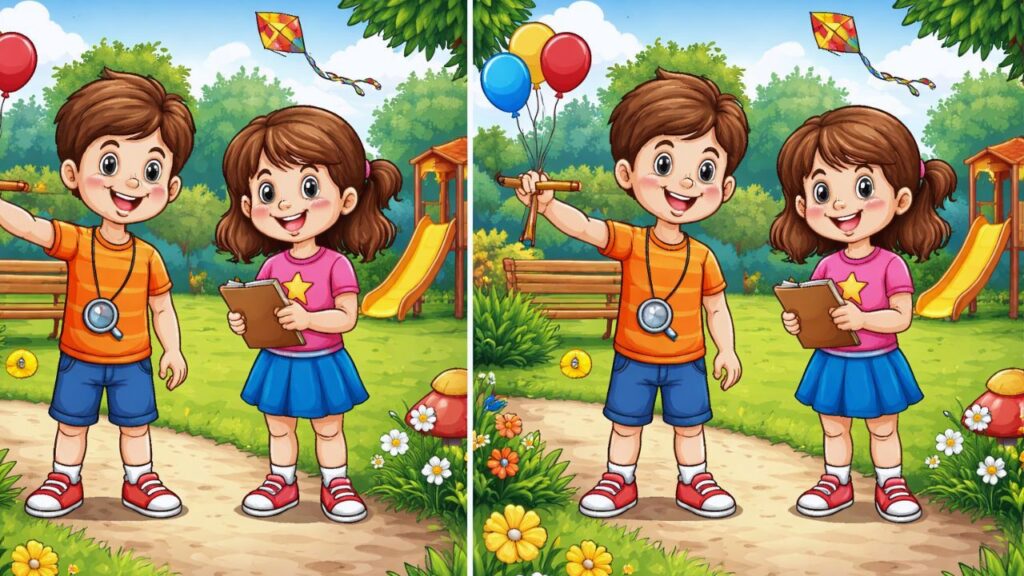
Spot-the-difference puzzles are gaining huge popularity in India as a fun way to test concentration and visual awareness. In this quick challenge, you have just 7 seconds to identify three small changes in a simple boy drawing. Sounds easy, right? But these puzzles are trickier than they appear because the brain often assumes both pictures are identical. Whether you play during a tea break or while relaxing at night, this activity sharpens focus and keeps your mind active without feeling like hard work.
Spot the Difference Puzzle Game Rules and Timing
The goal is simple: compare two almost identical images and locate three differences before time runs out. Start your quick visual test by scanning the picture from top to bottom instead of jumping randomly across the page. Many players panic when they hear a seven-second timer, but staying calm actually improves accuracy. Focus on clothing edges, facial features, and background objects because even a tiny line shift can be a clue. These puzzles are designed to reward sharp observation, not speed alone. When you slow your breathing and move your eyes methodically, your chances of spotting all changes increase dramatically.
Why Spot the Difference Challenges Improve Brain Skills
These visual games are more than just entertainment. They help develop concentration and strengthen mental processing. Your brain naturally forms an eye tracking habit as it scans both drawings carefully. Over time, you build faster pattern recognition and start noticing details people usually ignore. Teachers often recommend puzzles like this as focus training for children and adults alike. It is also a light brain exercise that reduces stress because your mind becomes fully engaged in solving a simple but satisfying problem. Instead of scrolling endlessly on a phone, you give your mind a structured and rewarding activity.
Best Ways to Solve a Boy Drawing Difference Puzzle
To win consistently, you need a strategy rather than luck. Treat the puzzle as a family game night challenge and take turns timing each other. Start by comparing major shapes before tiny details. Look at the hair outline, shirt buttons, and shoes, then shift to the background. Many people play during a classroom activity because it encourages attention without pressure. It also works as a healthy screen break during long work hours. Turning it into a friendly competition makes solving even more exciting, especially when players try to beat their own best time.
What Makes This 7-Second Challenge Addictive
What keeps people coming back is the perfect mix of fun and mental stimulation. Completing a puzzle feels like a daily mental workout without the stress of study or exams. Each solved puzzle strengthens attention to detail and increases visual confidence. The ticking timer creates a fun challenge that pushes your brain to react faster. Even after a busy day, spending a few minutes on this puzzle provides a refreshing mind refresh. You finish with a sense of achievement, which is why players often search for the next drawing immediately after solving one.
| Difference Type | Example | Difficulty | Helpful Tip |
|---|---|---|---|
| Clothing Change | Missing shirt button | Easy | Check outfit edges first |
| Facial Detail | Eyebrow angle altered | Medium | Focus on eyes and nose |
| Background Object | Tree branch removed | Medium | Scan background slowly |
| Color Variation | Shoe color mismatch | Hard | Compare color shades |
| Shape Adjustment | Hat size smaller | Hard | Outline shapes carefully |
Frequently Asked Questions (FAQs)
1. How many differences are in the puzzle?
There are exactly three changes hidden between the two drawings.

2. What is the time limit?
You should try to find all differences within 7 seconds.
3. Are spot-the-difference puzzles good for kids?
Yes, they improve concentration, observation, and patience in children.
4. Can adults benefit from this challenge?
Absolutely, adults gain focus improvement and mental relaxation.